Friday, December 6, 2019

Webinar | OutBack FLEXmax 100 AFCI - NEC 2017 Solutions

Outback FM100-AFCI

The addition of Arc Fault Circuit Interruption (AFCI) to the Outback FLEXmax 100 makes it the best solution on the market for NEC 2017 installations. In this first introduction of the product, the focus is on AFCI and the new NEC 2017 integrations. Listen to this webinar to find out why it’s the best charge controller option for NEC 2017.

https://youtu.be/NK3r5nr7U24


Thursday, November 14, 2019

Which Optima Battery is right for you?

Which Optima Battery is right for you? RedTop, YellowTop, or BlueTop?


The REDTOP Optima is a Starting Battery: Use this for normal engine starting where an alternator immediately monitors the state of charge and provides energy to the battery whenever it is needed. This would describe most stock vehicles.
Also use for:
  • Automotive and RV under-hood starting
  • Heavy equipment where starting is the primary function
  • Diesel-powered vehicles with no aftermarket electronics
The YELLOWTOP Optima is a Deep-Cycle Battery: Use this when electrical loads are higher than average, or when the discharge cycle is more than typical engine starting, such as vehicles without alternators. This also includes vehicles with significant electrical loads that may exceed the average alternator output (for example, aftermarket audio systems, GPS, chargers, winches, snowplows, inverters, drag cars). This can also include vehicles that have a lot of electronics from the factory, such as a minivan with power sliding doors and a DVD player, especially if the DVD player is used when the engine isn’t running.
Also use for:
  • Racing vehicles without a charging system (alternator or generator)
  • Dedicated drag-racing vehicles
  • Diesel-powered vehicles with aftermarket electronics
  • Car audio/video applications exceeding 250 watts over the OE system
  • Vehicles or heavy equipment with inverters, hydraulics, winches or other accessories
  • Electric vehicles
The BLUETOP Optima Marine Battery: The BLUETOP starting battery (dark gray case) is to be used when a dedicated starting battery is required; it should never be used for cycling duty. The dual-purpose BLUETOP (light gray case) can be used for both starting and deep cycling; it is a true deep-cycle battery with extremely high cranking power.
Also use for:
  • Trolling motors, marine applications with heavy electrical accessories and RVs should use a dual-purpose BLUETOP (which is both a starting and deep-cycle battery)
  • Marine applications and RVs when the battery’s only function is engine starting
Note: The difference between BLUETOP Optima and YELLOWTOP Optima deep-cycle batteries is that BLUETOP batteries have both automotive (SAE) posts and threaded studs, while YELLOWTOPS (other than D31T) only have SAE terminals.
If you ever get confused about the colored tops, just remember: If it has a dark gray case, then it’s a starting battery; if it has a light gray case, then it’s a deep-cycle (dual-purpose) battery.

Friday, November 8, 2019

Does a battery self-discharge? Yes!

All automotive wet batteries will slowly loose charge when not in service. This is known as self-discharge.
Standard maintenance free batteries containing certain grid alloys, self-discharge at a lower rate than deep cycle batteries. The rate of self-discharge increases with increasing temperature; this is true for both maintenance free and deep cycle batteries.
Allowing batteries to stand for an extended period of time without recharging them, will result in reduced performance and service life. To preserve optimum battery performance and life, recharge batteries in storage when the open circuit voltage drops to 12.4 volts.

To make up for self-discharge while in stock, a boosting charge should be given to batteries whenever they fall .040 points in specific gravity, corrected to 80°F (26.7°C). The boosting charge should be administered regardless if the batteries are to remain in stock or are being prepared for sale. This boost charge will normally be required after about 15-40 weeks of storage at 30°F (-1.12°C). The specific gravity drop will occur faster at elevated temperatures and slower at reduced temperatures. Observe the level of electrolyte before putting a battery on charge, and if necessary, add water to the cells to bring them to proper level.
A charge rate of 3% of the Reserve Capacity rate should be used to charge the battery. The charging should continue until the specific gravity of the electrolyte, corrected to 80°F (26.7°C), is constant over three successive readings taken at one hour intervals.
Some batteries may be sealed in a way that does not allow the specific gravity to be checked. The charging rate for these batteries is also 3% of the Reserve Capacity rate. The length of charge should be one half of the Slow Charge time on the Battery Charging Guide. For example, a battery rated at 100 minutes of Reserve Capacity and reading 12.4 volts should be charged at 3 amps for 10 hours.
Storing batteries for long periods of time without recharging them may accelerate grid corrosion and form boundary layers of non-conductive material between the grid wires and the active materials. This can result in a loss in capacity and early battery failure.

For more information visit our website or send us an email.  www.batterysales.com 

Tuesday, August 13, 2019

Morningstar ProStar MPPT Charge Controller

Professional Series

The ProStar MPPT™ is a mid-range MPPT solar charge controller with TrakStar Technology™ that provides  maximum power point tracking (MPPT) battery charging for off-grid photovoltaic (PV) systems up to 1100 watts. Available with and without advanced built-in meter. This device is ideal for industrial and residential applications. A Wire Box accessory to reduce hazards associated with exposed wires and connections can be purchased separately. Other accessories: EIA-485/RS-232 Communications AdapterRelay Driver, MeterHub, PC MeterBus Adapter, USB MeterBus Adapter, Ground Fault Protection Device, Remote Temperature Sensor

Model Numbers

Key Features and Benefits


  • Load and automatic PV-based lighting control
  • Charges all battery types including Lithium Ion
  • Continuous charging and no damage from PV array oversizing
  • Up to 256 days of data logging
  • Built-in self diagnostics
  • Highly durable polycarbonate case
  • Low noise design
  • MODBUS communications
  • Meter allows charging and temperature control adjustments without a computer
  • See a short 4minute Youtube video here: https://www.youtube.com/watch?v=uxEcEcfBWV8#action=share

Wednesday, July 17, 2019

Outback Power


Outback Power : MAKE THE POWER, STORE THE ENERGY, MANAGE THE SYSTEM 

Founded in 2001 by three engineers with a long history of developing technologies for renewable energy applications, OutBack Power's founders believed that the renewable energy industry was on the verge of unparalleled growth, driven by the emerging need for sustainable alternative sources of energy.

OutBack Power initially designed and manufactured integration hardware used by solar installers to house and protect power electronics installed in remote environments and harsh condition locations around the world. Soon the company launched an advanced line of rugged inverter products that delivered pure sinewave power for off-grid residential and commercial installations, ultimately expanding its offering to include off-grid inverters with battery backup, grid-tie inverters with battery backup, Maximum Power Point Tracking (MPPT) charge controllers, communications products and a complete line of OutBack EnergyCell batteries designed specifically for renewable energy applications. Over that time, we forged a reputation as the recognized leader in the design and manufacture of battery-based, off-grid renewable energy systems.


17 years later, we continue to lead the way with advanced off-grid and grid-interactive battery-based renewable energy systems, the fully UL 1741 SA listed Radian Series and FXR Series inverter/chargers and our SystemEdge packages that bundle the right combination of energy storage and power electronics, merging energy independence with smart home technology for a range of common applications.
Bottom line: If you are installing or upgrading to a battery-based renewable energy system, the Solar + Energy Storage Experts at OutBack Power are the only choice.

And now, you can build a package of solar modules, racking, batteries, and Outback Power products all at Battery Sales USA!


Thursday, January 17, 2019

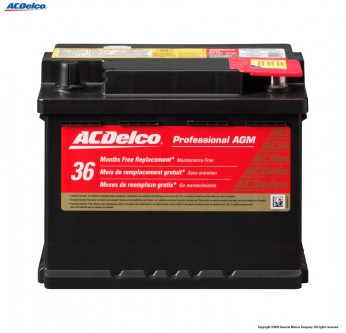
ACDelco Professional Automotive AGM Batteries

ACDelco Professional Automotive AGM Batteries have high cycling capabilities, are remarkably charge-receptive, and are necessary for ‘start/stop’ vehicle applications. The Absorbed Glass Mat design is 100% leak and spill proof because the Electrolyte is permanently held in the glass mat separator instead of free flowing within each cell. Oxygen recombination minimizes water loss and reassures maintenance-free performance. ACDelco Professional Automotive AGM Batteries also have a 36 month Free Replacement Period.
ACDelco Professional 34AGM Battery


ACDelco Professional 47AGM Battery

ACDelco Professional 48AGM Battery

ACDelco Professional 49AGM Battery

ACDelco Professioal 65AGM Battery


ACDelco Professional 78AGM Battery

ACDelco Professional 94RAGM Battery

Tuesday, September 18, 2018

AIMS POWER INVERTERS

AIMS POWER INVERTERS

MODIFIED POWER INVERTERS

PURE SINE WAVE INVERTER CHARGERS

Battery Sales USA, Inc / Solar Sales USA, Inc is proud to be a Master Distributor for Aims Power Inverters. The products listed in these pages are stocking items, if there is something you are looking for and not on these pages, please email sales@batterysales.com for product pricing and availability. AIMS Power has been an industry leader in power inverter products since 2001. AIMS is your complete source for DC to AC power inverters. We strive to carry the most complete line of DC power inverters available today. The engineers work hard to make power inverters that meet a variety of customer needs. 

Inverters for any application; commercial inverters, industrial inverters, consumer power inverters, and power inverters for cars and whole house inverters. AIMS power is an industry leader in DC power conversion, they are consistently developing innovative products for use in green energy applications and in mobile businesses around the globe. Specialty is DC to AC power inverters, the complete line of DC to AC inverters include; 12 Volt Power Inverters, 24 Volt Power inverters, and 48 Volt Power Inverters – available in Modified Sine Wave Inverters and Pure Sine Wave Inverters

AIMS Power produces a complete line of modified sine wave power inverters and pure sine wave power inverters. In addition, there is a full line of power inverters with built in chargers and transfer switches. The inverter chargers can be used in 50Hz & 60Hz systems, the export power inverter line is perfect for the Caribbean Islands, South America, Central America, Africa, Europe, and Australian markets. Perfect for off-grid renewable energy applications. 

Real World Applications for DC to AC Power Inverters: Inside a work truck to power computers, tools and other electronic equipment, Providing power on remote job sites, In off-grid cabins and sheds, Powering small devices, In industrial vehicles to power x-ray machines and large compressors, Power Inverters are commonly used for AC power in RVs and boats, For emergency back-up power in the home or office. 

AIMS POWER PURE SINE INVERTER CHARGERS

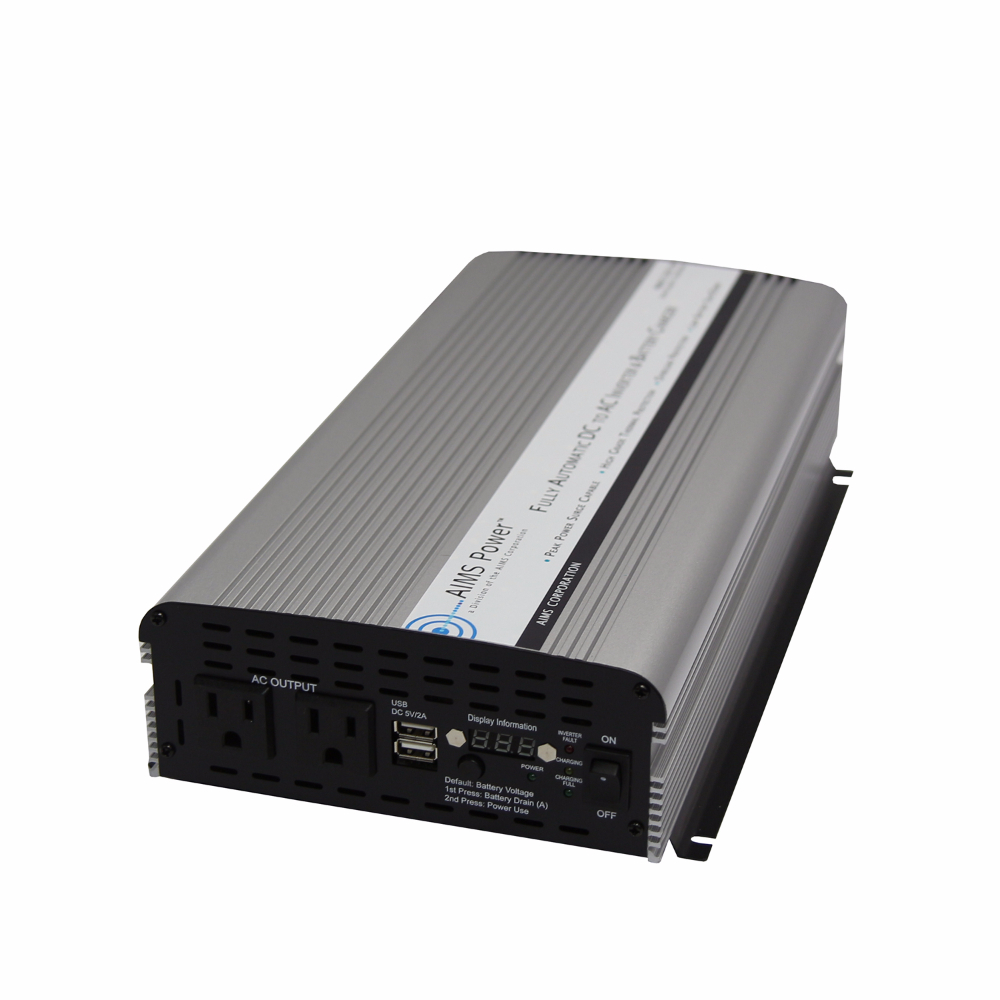
AIMS POWER MODIFIED INVERTER CHARGER - 1500WATT/12VOLT


Tuesday, April 30, 2013

BCI Battery Replacement Data Book 1994-2013

The brand new BCI Battery Replacement Data Book for applications from the years 1994 through 2013 is now available in the Battery Library section of our website, Battery Sales. Each year, Battery Council International (BCI), comes out with their new application guide. The replacement battery guide includes a lot of helpful information including:
  • Explosion Danger, Installation, Charging, Handling, Booster Cables, pages 2-5
  • Explanation of Data, Abbreviations, page 6
  • BCI Assembly Numbers, Cell Layouts, Hold downs and Polarity, pages 7-11
  • BCI Group Numbers, Dimensional Specifications and Ratings, pages 12-15
  • BCI/DIN/EN Reference Chart, page 17
  • BCI/JIS Reference Chart, page 17
  • Power Sport Battery Type Reference and Terminals Charts, pages 18-21
The Battery Application Section of the BCI Battery Replacement Data Book include:
  • Passenger cars and Light Trucks, pages 22-50
  • Trucks, pages 51-63
  • Farm Equipment, pages 64-70
  • Lawn & Garden Equipment / Small Engine, pages 71-85
  • PowerSport - Motorcycle & Scooter, pages 86-93
  • PowerSport - utility Vehicle, page 94
  • PowerSport - ATV, pages 95-98
  • PowerSport - Personal Water Craft (JetSki) / Snowmobile / Go-Kart, pages 98-103
All of these types of batteries are available at, Battery Sales. We have two locations in South Florida.

Battery Sales - North Miami
12275 NE 13th Avenue
North Miami, FL 33161
Ph: 305-891-8355
Fax: 305-891-2062
Email: sales@batterysales.com


Curtis Battery Sales - Miami
1500 NW 20th Street
Miami, FL 33161
Ph: 305-325-1460
Fax: 305-325-1462
Email: curtis@batterysales.com

Friday, February 3, 2012

Authorities baffled by thefts of truck batteries in five cities


This morning there was an article in the South Florida Sun Sentinel newspaper about batteries being stolen from trucks and automobiles throughout Broward County. Authorities are apparently baffled as to why the trend in battery theft. They should have asked Battery Sales.


The battery theft is not contained to just Broward County. Batteries are being stolen in Miami-Dade as well. You may recall a news report a few months ago when batteries were stolen from approximately 40 Miami-Dade County School Buses. At Battery Sales, we have customers buying replacement batteries for their cars at least a couple times a week, if not more. You would consider yourself lucky if the theives only took the battery. On occassion, we find the theives are cutting the cables as well. Not only do customers now have to buy a new battery; but, they also have to buy cables, terminals, and other accessories.


The driving force behind the upward trend in battery theft is the price of lead. At the moment, the price of lead is on the rise. When lead jumps in price...so does battery theft. Batteries are being sold to scrap yards and in turn sold to smelters or to the Chinese for reuse offshore.


Monday, September 19, 2011

China is having an effect on battery prices in the U.S.

You may be aware by now that over the past few months the lead acid battery industry has been impacted fairly substantially by government-imposed actions in China. Most notable have been the stricter enforcement of environmental regulations and the implementation of more stringent requirements. There have also been periodic mandatory shutdowns due to power shortages. The end result is reduced productivity and higher costs.

Also contributing to increased manufacturing costs are rising salaries/wages, insurance, and fuel as well as continued currency valuation adjustments. For these reasons, battery manufacturers have found it necessary to adjust prices accordingly. We are thankful that lead costs have remained reasonably stable and does not appear to be a factor in price changes at this time.

New lead acid battery prices will be handed out by Yuasa, Power-Sonic, Enersys, and several other sealed lead acid manufactures whose product comes from China. Stay tuned! www.batterysales.com - your source for automotive, commercial, industrial, marine, and special application batteries.

Wednesday, August 31, 2011

Determining the Cause of Battery Failure

Determining the Cause of Battery Failure:

Factors which are important in determining cause of battery failure are battery application, installation, service history, battery condition, and age. The answers to the following questions will aid in making an accurate determination:

Battery Application & Installation


  1. Is the battery being used in the application for which it was designed, i.e. automotive, truck, tractor, bus, marine, golf cart, electric, or recreational vehicle? For example, an automotive battery used in heavy duty or deep cycle service is an obvious misapplication.


  2. Is the battery sized properly for the application? Is the Cranking Performance rating at least equal to vehicle original equipment requirements?


  3. Does the vehicle have excessive electrical accessory requirements, particularly those which are not original equipment, e.g. add-on air conditioning, radio, winch, or other accessories? If so, a battery with greater performance may be required.


  4. Does the hold-down hardware fit the battery properly and is it properly adjusted? Does the battery's BCI group size match the vehicle's OE requirements or equivalent?


  5. Do the battery cables fit the battery terminals properly and are they properly adjusted and cleaned? Have the terminals been converted from size to top terminal or vice versa and is there proper clearance for terminals from metallic parts?


Service History of the Battery:


Obtaining the service history of the battery and any history of problems from the owner may help in determining the cause of failure.


  1. Has the battery been used in vehicles or applications other than the present one? Other applications may have adversely affected battery life.


  2. Has the vehicle's electrical system been repaired or altered recently (very common to the cause of battery failure) and is it in proper operating condition? Charging system operation has a significant effect on battery life.


  3. Has the vehicle been driven regularly or has it been parked for a lengthy period of time? Batteries self-discharge with time; extended periods of undercharge may have a detrimental effect on battery life.


  4. Has the vehicle been difficult to start for any reason? Starting problems may have placed excessive loads on the battery or may indicate an undersized battery.


  5. Has the battery required frequent water additions in one or more cells? Excessive water loss in all cells may indicate overcharging, a worn out battery, or both.


Visual Inspection


Visual inspection of the battery may reveal signs of abuse which may have caused failure.


  1. Do the terminals show signs of having been hammered, twisted or driven down into the cover? Even minor abuse can cause internal damage.


  2. Does the container or cover show signs of stress, breakage, high temperature, or vibration damage which might have caused leakage in internal damage?


  3. Are the vents installed properly and are they plugged with foreign material? Improperly installed, missing, or plugged vents can be a cause of explosions, leakage or contamination.


  4. Is there excessive build-up of acid or foreign material on the cover? A build-up of foreign material mixed with acid around or between the posts can cause high self-discharge rates or inadequate re-charge.


  5. Are electrolyte levels below the tops of the plates in any cells? This could indicate overcharging, lack of maintenance, or internal shorts.


  6. Is the electrolyte cloudy, discolored, or contaminated with foreign material? Cloudy electrolyte can indicate active material spalling due to overcharge or vibration. Electrolyte contamination can cause high self-discharge rates and poor performance.


  7. Are the separators cracked or broken below the vent openings? Misuse of hydrometers or other tools could cause cell shorts.


  8. Are alternate plates dark and light colored? In a charged cell, the positive plates should be dark in color and the negative plates light. If all plates are very light, severe undercharging could be indicated.


Battery Age & Date Coding


The battery's age can be an important factor in determining the cause of failure. The length of time in service determines whether the battery failed prematurely or had simply worn out. All battery manufacturers date their poduct by stamping a date code into the cover or container. This code can be used to dermin the actual age of the battery. The individual manufacturers should be consulted regarding their specific date codes.


More important is the date the battery was sold. This date determines the time the battery has been in service. The date of purchase on all battery bought at Battery Sales is indicated on a dater label with a letter and number combination, e.g. A1 would indicate January 2011.


Overcharging and Undercharging Batteries


The vehicle's charging system can have a profound effect upon the life of a battery. A high voltage regulator setting can cause excessive gassing and water loss, thermal runaway, and eventual damage to plates and separators. We often see these on vintage sports cars. This is extremely common when replacing a lead-acid battery with a sealed gel battery. Gel batteries are constantly being overcharged and failing because of the voltage regulator. If the voltage regulator setting is too low, there is a high resistance in the charging circuit, or the charging system is not capable of handling the accessory load the battery will be in a constant state of discharge. If this happens over a long period of time, the sulfate which deposits on the plates can become hard and crystallize. In this form, the plates may not accept a charge under normal conditions and may even cause short circuits through the separators due to a build-up of lead sulfate through the pores which is converted to lead shorts during recharge.


Voltage regulator settings vary among vehicle manufactures and may not be adjustable. They should be checked with the indivdual manufacturer before adjustment is atempted. Different battery types using different grid alloys and manufacturing processes may require different charging methods; this includes Lead Acid Batteries, AGM Batteries, and GEL Batteries.


Lifeline...the heart of your system

Lifeline...the heart of your system:
Battery Sales sells Lifeline Batteries at wholesale pricing...call for a quote today!

Lifeline has been the leading name in AGM batteries since 1993 (Absorbed Glass Mat) . The quality and durability of the Lifeline battery series has been proven again and again in military and commercial applications worldwide.

The AGM Battery Difference:


  • 20% faster recharge than a conventional vented battery and gel battery.


  • 100% maintenance free battery. No addition of water needed.


  • Classified as "NONSPILLABLE" and can be shipped HAZMAT Exempt by any means.


  • Tested to stringent military shock and vibration standards.


  • Minimal gas release under normal charging conditions.


Sizing a Lifeline Battery Bank:


It is always good to have twice the battery capacity that an applicaiton requires. This will promote long battery life and also reduce the amount of recharge time.


Lifeline Battery Charging:


Warning: All batteries must be adequately vented during charging to avoid accumulation of explosive hydrogen gasses. never install or charge in a sealed container or room.


The following chargin voltages are recommended for maximim battery life for all Lifeline Battery Models:


Volts Per Cell 6 Volt Battery 12 Volt Battery


Bulk/Absorb 2.37 - 2.40 7.10 - 7.20 14.2 - 14.4


Float 2.20 - 2.23 6.60 - 6.70 13.2 - 13.4


Conditioning / Equalizing Charge for Lifeline Batteries:


Charge at 15.5 volts for 8 hours.


Conditioning/equalizing should only be done when the battery is showing symptoms of capacity loss. If conditioning/equalizing is necessary, first go through the normal charge cycle. Once the battery is fully charged, start the conditioning/equalizing charge.


Note: For maximum life, batteries must be periodically recharged to 100% capacity. Continually recharging to less than 100% may result in premature capacity loss. It is recommended that batteries be recharged to 100% at least every 5-10 cycles.


For Inverter/Charger Lifeline Battery Applications:


Refer to the inverter/charger manual to ensure the correct voltages have been set.


Knowing when to recharge your Lifeline Battery:


As a general rule, batteries should be recharged immediately after use or when they reach approximately 50% depth of discharge. Discharging to 60% or even 100% occasionally will not harm the batteries, but if this is done frequently it will shortent he battery's overall life. If batteries are discharged beyond 50%, it is important to recharge as soon as possible (same day if possible). The depth of discharge can be estimated by measuring the "open circuit voltage" as shown in the following table. Note that the battery must be at rest with no loads for at least 4 hours to obtain an accurate "open circuit voltage"


Depth of Discharge Volts/cell 6 Volt Battery 12 Volt Battery


0% 2.3V or more 6.4V or more 12.8V or more


25% 2.08V 6.25V 12.5V


50% 2.03V 6.10V 12.2V


75% 1.98V 5.95V 11.9V


100% 1.93V or less 5.80V or less 11.6V or less


Multiple Lifeline Batteries:


If there is more than one battery in the battery bank, the following guidelines should be used:


  • Always use batteries of identical make, model and with the same manufacturing date.


  • Make sure the battery cable is not undersized for the battery system.


  • Make sure the battery cables are connected to the terminals correctly. If unsure, professional assistance is recommended.


Storing Lifeline Batteries:


Follow these guidelines if the battery is to be stored for an extended period of time (more than a month):


  • Fully charge the battery before putting it in storage and store in a cool place.


  • It is not necessary to leave the battery on charge while in storage.


  • Disconnect the negative battery cable. This will prevent inadvertent discharging of the battery that may lead to a complete discharge.


  • Boost charge the battery every 3 months while in storage to ensure maximum battery life.


Lifeline Battery Warranty:


Lifeline batteries have a 5-year pro-rated warranty with a 1-year free replacement (12-month prorated warranty in applications other than marine or RV). The warranty period starts at the time of purchase. If the original receipt is lost, the warranty will be based on the battery date code. The warranty covers defects in material, workmanship and failure, except where such failure is due to abuse, neglect or breakage. The warranty period starts at the time of purchase. If the original receipt is lost, the warranty will be basedon the battery date code. The warranty covers defects in material, wrokmanship and failure, except where such failure is due to abuse, neglect or damage to injury, discharged batteries, rental freight, or installation costs. Replacement batteries will be provided at the time the warranty is reuested. Credit will not be issued after the purchase of a new battery. For additional Lifeline Battery warranty questions, please contact Lifeline Inc at (800) 527-3224.


Tuesday, January 25, 2011

46 years young!

Battery Sales is celebrating their 46th year in Successful Business.

With a commitment to quality and service its no wonder why Battery Sales has maintained the leading Battery Specialist position in the South Florida Battery market for the past 46 years!

  • In the event of a power outage, are you prepared?
  • Are your Back-up Power Sources charged and up to date?
  • Are you looking to go Green and Eco-friendly and are in need of Solar Panels and Inverters
Discharged, old batteries, bad cables and terminals, and even slight corrosion can prevent you from obtaining the power you need in an emergency.

We offer a complete line of lead acid, sealed rechargeable, and gel cell batteries for generators and emergency lighting applications.

Call our offices today to schedule an appointment with a service technician to inspect your back up power sources. With Battery Sales you will receive good service that will be here next week, next month, next year!


We do recycle your old batteries so bring them in too!

check out http://www.batterysales.com/


or call 305-891-8355

FOR YOU BATTERY NEEDS!


INTERNATIONAL EXPORTS WELCOMED

Tuesday, November 9, 2010

Solar Sales inc.

The Solar industry is booming and Everyone is doing there part on becoming green, and exploring safe and efficient forms of energy. Battery Sales and Solar Sales inc. are here to help.

Explore our inventory of Solar Panels, Inverters, Chargers, and Batteries.


If you havent already checked out the Solar Sales inc website follow the hyper link:
http://www.solarsalesinc.com/


It can be inmidating to switch to solar energy but email us our visit our warehouse and let us put your mind at ease.


check out http://www.batterysales.com/


or call 305-891-8355
FOR YOU BATTERY & NOW SOLAR NEEDS!


INTERNATIONAL EXPORTS WELCOMED!


Wednesday, August 25, 2010

Power King Marine Batteries!

  • When the application requires a power source to provide extended use, dependability, and endurance, the Power King build batter is the optimum choice. Our marine line offers the performance required for deep cycling, high vibration, and dependable starting, time after time.
  • More and more boating enthusiasts depend on Power King marine batteries that are designed and engineered to deliver dependable, trouble free performance. The deep cycle batteries deliver outstanding continuous use cycling for the weekend fisherman or the tournament pro.
  • The performance of these batteries are enhanced by features like stainless steel terminals, hybrid radial grids with center line lugs, high density oxide, polyethylene envelope separators and safety vent caps.
  • Power King deep cycle batteries have performance glass at that extends cycle life. this unique feature also adds dimensional stability and rigidity to the positive plate while retarding the shedding of the active material and lessen possible failure due to excessive vibration.
  • A Power King battery is built to go the distance with unmatched performance. Power King offers superb marine product in a 24M starting battery and Group 31M, 27M , and 24M Deep Cycle batteries. The entire Power King Marine Battery line features the new twin post design. This innovative design allows cables and accessories to be accessed quickly and more effectively.


check out http://www.batterysales.com/


or call 305-891-8355

FOR YOU BATTERY NEEDS!


INTERNATIONAL EXPORTS WELCOMED!

Wednesday, July 21, 2010

Know you Battery

It's summer and if your a avid follower you know that your battery is becoming hydrated and may be on the verge of needing a replacement. Average life of a battery in miami is about 3 to 4 yrs so if you bought a car between 2006-2007 your battery needs to be replaced. BUT! do you know the type of battery that goes into the car?


Taking the top 10 most popular cars in 2006 and 2007 we have provided you with a guide to sure help when purchasing your next battery.


CAR: 2006 2007
MINI COOPER 47 47

PONTIAC SOLSTICE 86 86

LEXUS RX 400 51R 51R

SCION XA 25

SMART FORTWO 47 47

SCION XB 25 24F

SCION TC 24 24

TOYOTA CAMRY ENGINE L4 35
ENGINE V6 24F
2007 ENGINE L4 35
2007 ENGINE V6 24F


NISSAN ALTIMA 24F GAS 35
HYBRID 34


TOYOTA CAROLLA 35 35

TOYTA YARIS 35 35

HONDA ACCORD
ENGINE L4 51R
ENGINE V6 35

2007 ENGINE L4 51R
2007 ENGINE V6 35

HONDA FIT 151R 151R

FORD FOCUS 40R 96R

HONDA CIVIC 51R 51R


check out http://www.batterysales.com/


or call 305-891-8355

FOR YOU BATTERY NEEDS!


INTERNATIONAL EXPORTS WELCOMED!

Friday, June 18, 2010

SAFETY PRECAUTIONS: when handling a battery

There are many dangers revolving around batteries. Batteries contain sulfuric acid and produce explosive materiel such as hydrogen and oxygen gas, so a battery must always be stored in a well ventilated area to reduce the chances of it exploding.

If handling battery acid or electrolyte [which is a solution of sulfuric acid and water] use extreme caution. It has the potential to destroy clothing and burn the skin. Always keep an acid neutralizing agent close at hand. The Battery Council International recommends to keep neutralizers such as baking soda, or household ammonia mixed with water near by in case of a spill.

When handling the batteries always wear:

  • Proper eye, face and hand protection. (ANSI Z87.1 US STANDARD APPROVED SAFETY GLASSES)
  • If the electrolyte is splashed into an eye, immediately force the eye open and flood it with clean, cool water for at least 15 minuets and seek Immediate medical assistance.
  • If electrolyte is taken internally, drink large quantities of water or milk. DO NOT INDUCE VOMITING. Seek immediate medical assistance.
  • Neutralize with baking soda if electrolyte spills on work area or vehicle, After neutralizing rinse area with water.
  • Under NO condition should a consumer prepare to adjust the concentration of electrolyte using concentrated sulfuric acid.

To reduce the chances of a battery exploding:

  • Again wear proper eye, face, and hand protection
  • Keep all sparks, flames, and cigarettes away from the battery
  • Never try to open a battery with non-removable vents.
  • Keep removable vents tight and level
  • Never lean the battery when charging or testing
  • Exercise caution when working with metallic tools to prevent short circuits or sparks
  • Heed all precaution labels and warnings, and always consult your service manual.


check out http://www.batterysales.com/


or call 305-891-8355

FOR YOU BATTERY NEEDS!


INTERNATIONAL EXPORTS WELCOMED!

Wednesday, June 2, 2010

need to know Battery terminology

Ever felt confused when purchasing a new battery and the dealer is throwing out words like Flooded battery, AGM, Hydrometer, and CCA? Jargon specific to batteries that a lot of people are just not familiar with....

Well let us simplify those terms for you so you can blend in with the pro's or rather not feel so confused and bamboozled.

Glossary:

AGM- also know as Absorbed (absorptive) Glass Mat. Technique for seal lead-acid batteries. Electrolyte is absorbed in a matrix of glass fiber, which holds the electrolyte next to the plate and immobilize it, preventing spills. AGM batteries tend to have good power, low internal resistance, good behavior during charging.

Amp, Ampere- unit of electrical current

Amp Hour- unit of electrical energy, one amp of current flowing for one hour. (AH)

Cell- A single battery canister usually grouped together with other cells to form battery packs of different voltages and amperage.

CCA- refers to the number of amperes a battery can support for 30 seconds at a temperature of 0°F until the battery voltage drops to 1.20 volts per cell, or 7.20 volts for a 12V battery. Thus, a 12V battery that carries a rating of 600 CCA tells us that the battery will provide 600 amperes for 30 seconds at 0°F before the voltage falls to 7.20V

Electrolyte- conductive medium in which current flow is due to the movement of ions. In a lead acid battery, the electrolyte is a solution of sulfuric acid.

Flooded cell- the electrolyte is an ordinary liquid solution of acid. Flooded cells are probe to making gas while being charged. They must be periodically checked for fluid level and water added as necessary. Flooded cells are also typically less expensive than agm or gel type.

Gel battery- contain acid that has been "gelled" by the addition of Silica Gel, turning the acid into a solid mass that looks like gelatin. The advantage of these batteries is that it is impossible to spill acid even if they are broken.

Hydrometer- tool for testing the specif gravity of a fluid, such as the electrolyte in a flooded battery.

RC-The reserve capacity of a battery is defined as the number of minutes that it can support a 25 ampere load at 80°F until its terminal voltage drops to 1.75 volts per cell or 10.50 volts for a 12V battery. Thus a 12V battery that has a reserve capacity rating of 100 signifies that it can be discharged at 25 amps for 100 minutes at 80°F before its voltage drops to 10.75 volts.

Sulfation- even though lead sulfate is created in material of plates during normal discharging, this term is used to describe the generation of a different from (large crystals) of lead sulfate which will not readily convert back to normal material when battery is charged. Sulfation occurs when a battery is stored to long in a discharged condition. If it is never fully charged, or if electrolyte has become abnormally low due to excessive water loss from overcharging and or evaporation.

Volt- the unit of measurement of electrical potential or pressure. Most batteries com in 6, 12, 24.

Watt-the unit for measuring electrical power, i.e., the rate of doing work, in moving electrons by, or against, an electrical potential. Formula: Watts = Amperes x Volts.

Tuesday, June 1, 2010

NOW on Facebook and Twitter!

Hello there followers! we have expanded our social networking and have added Facebook and Twitter to our calling card!

So this enables a more interactive way to speak to us. Come visit our facebook page and become a fan.... Ask us/Tell us how our services are benefiting you and how we can Improve.

Are there blog topics you need to know but cant find anywhere online?
Let us know and we do the research for you ;)


click on the hyperlinks:
facebook
twitter

Tuesday, May 18, 2010

Summer months Bring summer heat!

It seems that on average a battery's life can range between 3 to 5 years, but this heavily depends on the care and maintenance through out it's life span. In order to maximize the life span ignoring the summer months is not an option.

Through out the summer, the constant heat has the ability to stress and cook batteries. This is especially important to all my native Floridians, [and other warm weather folks]. Summer temperatures usually range from 90*-104* degrees, but adding engine heat that is tramped under and metal hood, temperature surrounding your car battery can be as high as 140* degrees.


Most people believe that winter is the time of year the most strain is on the battery but what most do not realize is heat evaporates the fluid within the battery aging it and speeding up the corrosion process. Summer's heat kill batteries 30% faster then winter's cold temperature. AcDelco mentioned, batteries in Florida have a life span of 33 months unlike our cold weather friends in Michigan where their batteries are lasting 50 months!

So, instead of running the risk of being stranded in the summer months, The time of year where AAA receives the most calls for jumps, or towing because of a failed battery, Prepare to purchase a new battery during the spring!


TIPS:

Ways to extend battery life


  • test your battery twice a year

  • inspect for any physical damage

  • check for corrosion, clean if present

  • Don't ignore warning signs!!


Warning signs to look for:


  • if the car is rather old it can cause a strain on the battery

  • traveling short distances can shorten life

  • starting and stopping constantly

  • sometimes dimming headlights or interior lights may be a cause for concern

  • if the battery is over 3 years old GET IT TESTED!

  • if it is over 4 years old.... REPLACE


Don't know how to test your battery bring it in and we can do it! Need to purchase a new battery? bring it in and we can do it!

Have questions about batteries? ASK AWAY WE CAN HELP!

check out http://www.batterysales.com/


or call 305-891-8355

FOR YOU BATTERY NEEDS!


INTERNATIONAL EXPORTS WELCOMED!